Our Bees
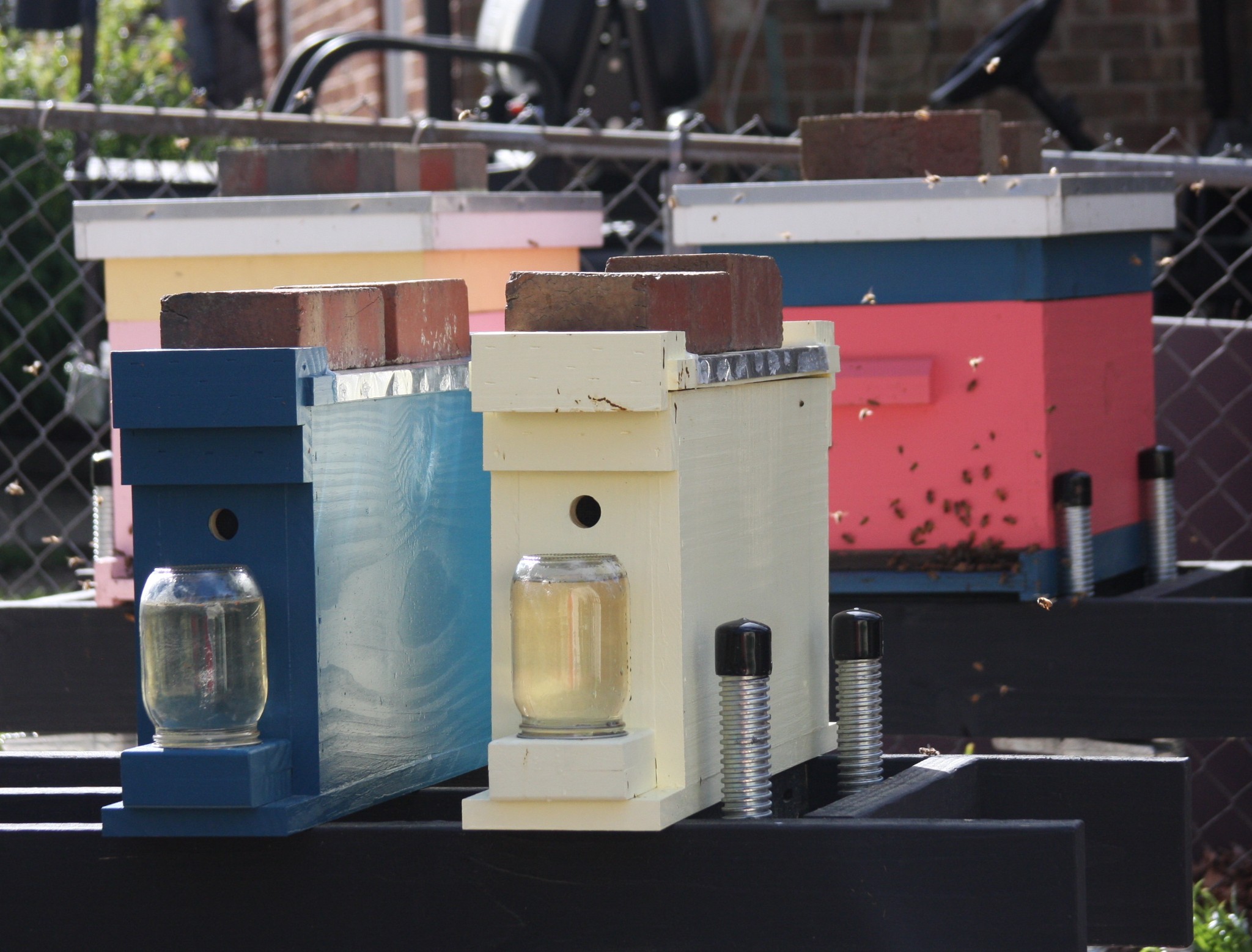
worker bee orientation flights
Meet Our Colonies
Our apiary is home to Italian honeybees (Apis mellifera ligustica), known for their gentle temperament and excellent honey production. These golden-colored bees are perfect for urban beekeeping and are well-suited to our North Carolina climate.
We also maintain colonies of Caucasian honeybees (Apis mellifera caucasica), which are prized for their extremely gentle nature and ability to work in cooler, wetter conditions. Originating from the Caucasus Mountains, these darker bees are excellent foragers and produce a distinctive, flavorful honey. They're known for using more propolis than other subspecies, which helps protect the hive.
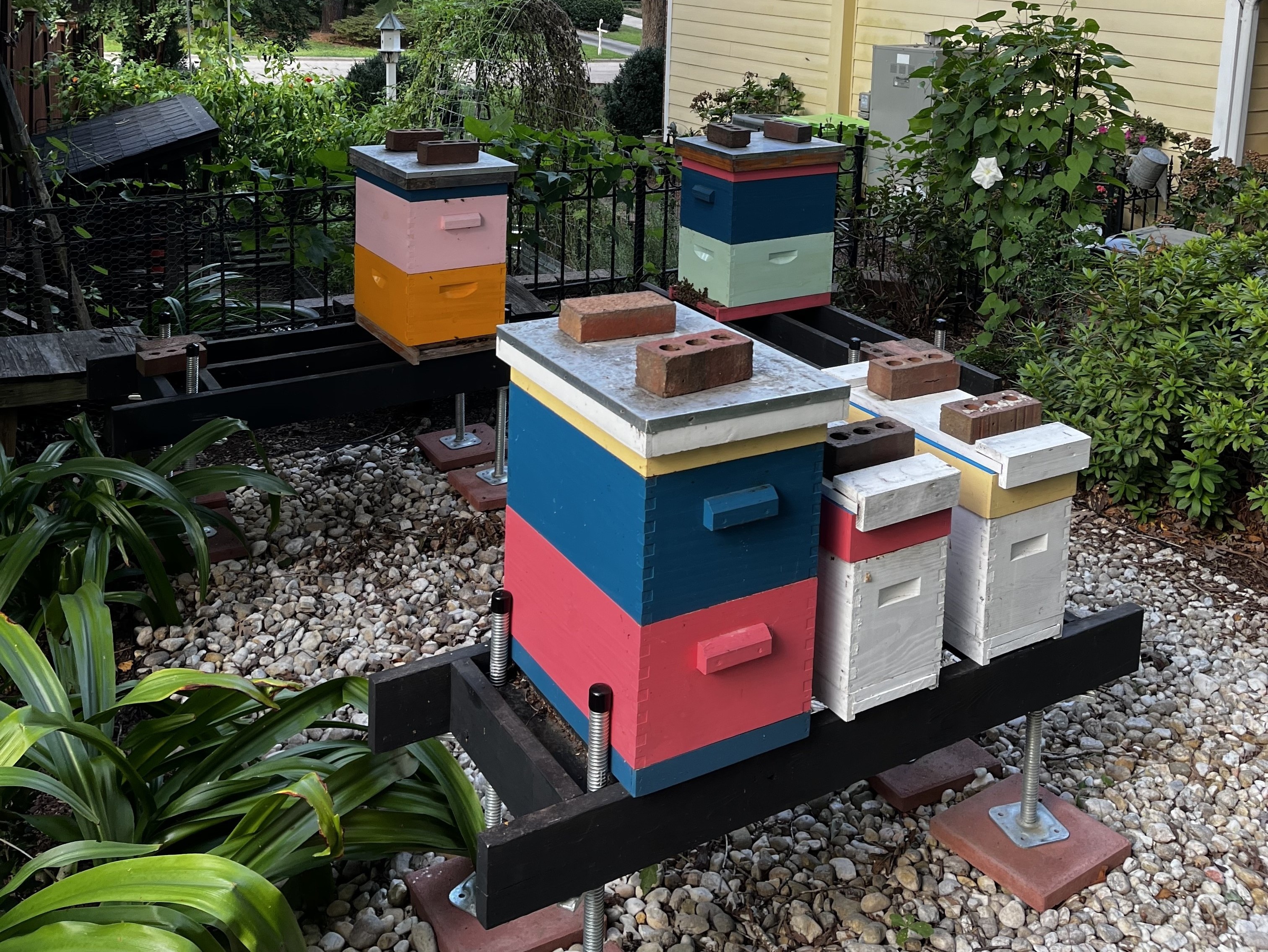
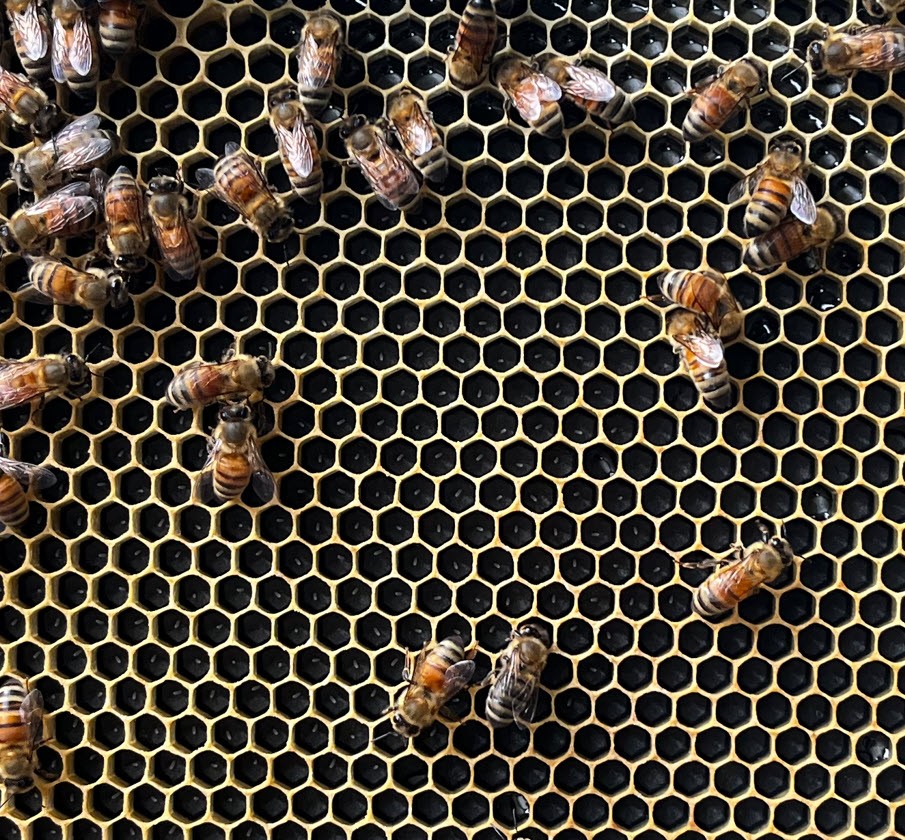
Each of our hives has its own personality! We maintain several colonies, each led by a laying queen who can produce up to 2,000 eggs per day during peak season. Our colonies range from 30,000 to 60,000 bees during the busy summer months.
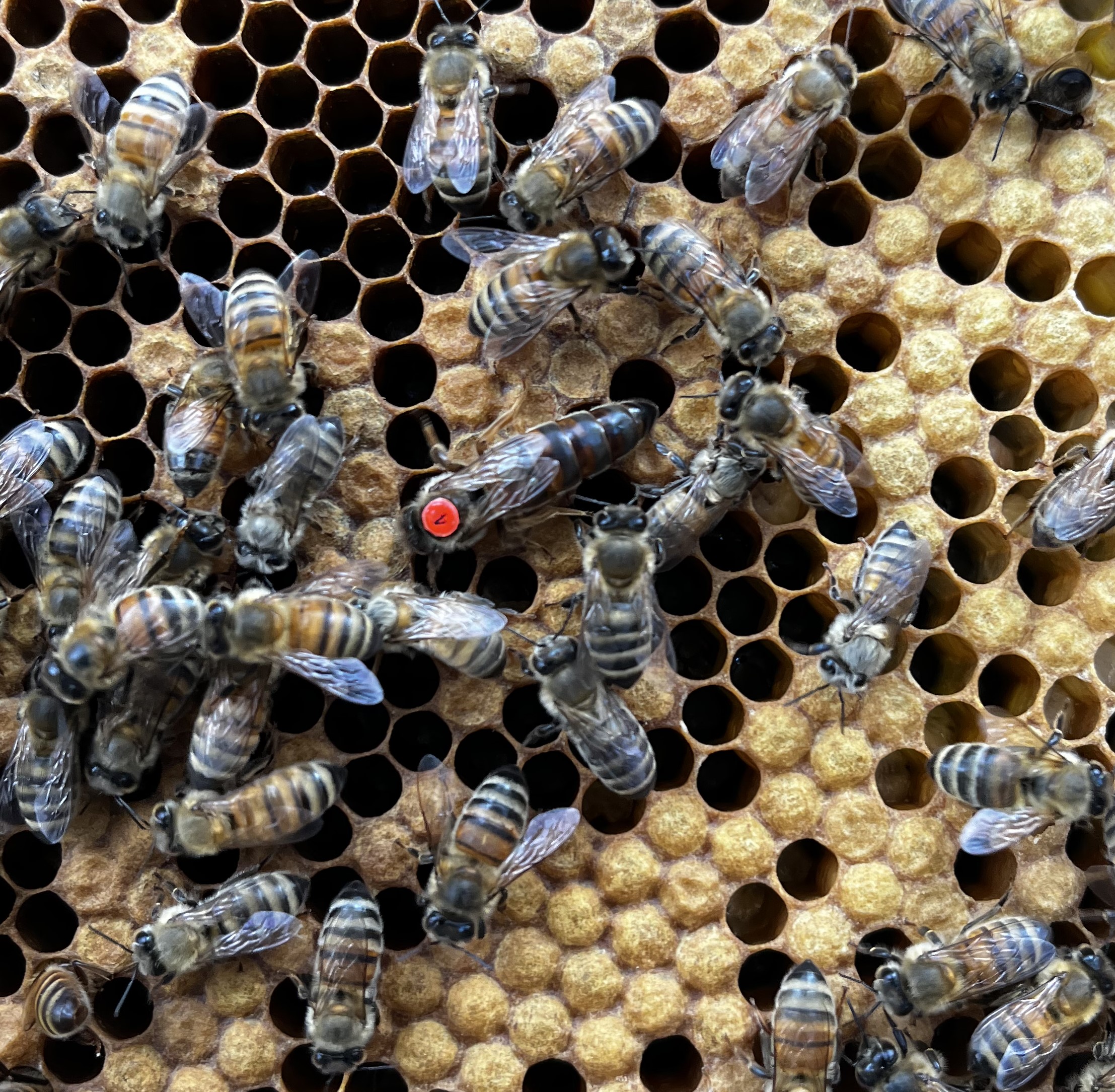
queen laying eggs
Our Queens
The queen bee is the heart of every hive. She's the only bee in the colony that lays fertilized eggs, and her pheromones help maintain harmony among thousands of worker bees. Remarkably, there is typically only one queen per hive, and she is visibly different from her workers—noticeably longer and more slender, with a distinctive elongated abdomen.
Queen bees are created through a fascinating process involving royal jelly. When a colony needs a new queen, worker bees select young larvae and feed them exclusively with royal jelly—a protein-rich secretion produced by nurse bees. This special diet triggers the development of a larva into a queen rather than a worker bee. Royal jelly is so nutritionally powerful that it causes the queen to develop fully functional reproductive organs and grow nearly twice the size of a worker bee.
Our queens are carefully selected for their gentle genetics and strong egg-laying patterns. We work with local queen breeders to ensure our colonies have the best genetics suited for our region.
A healthy queen can live 3-5 years, though we monitor each queen's performance and replace her when necessary to maintain colony health.


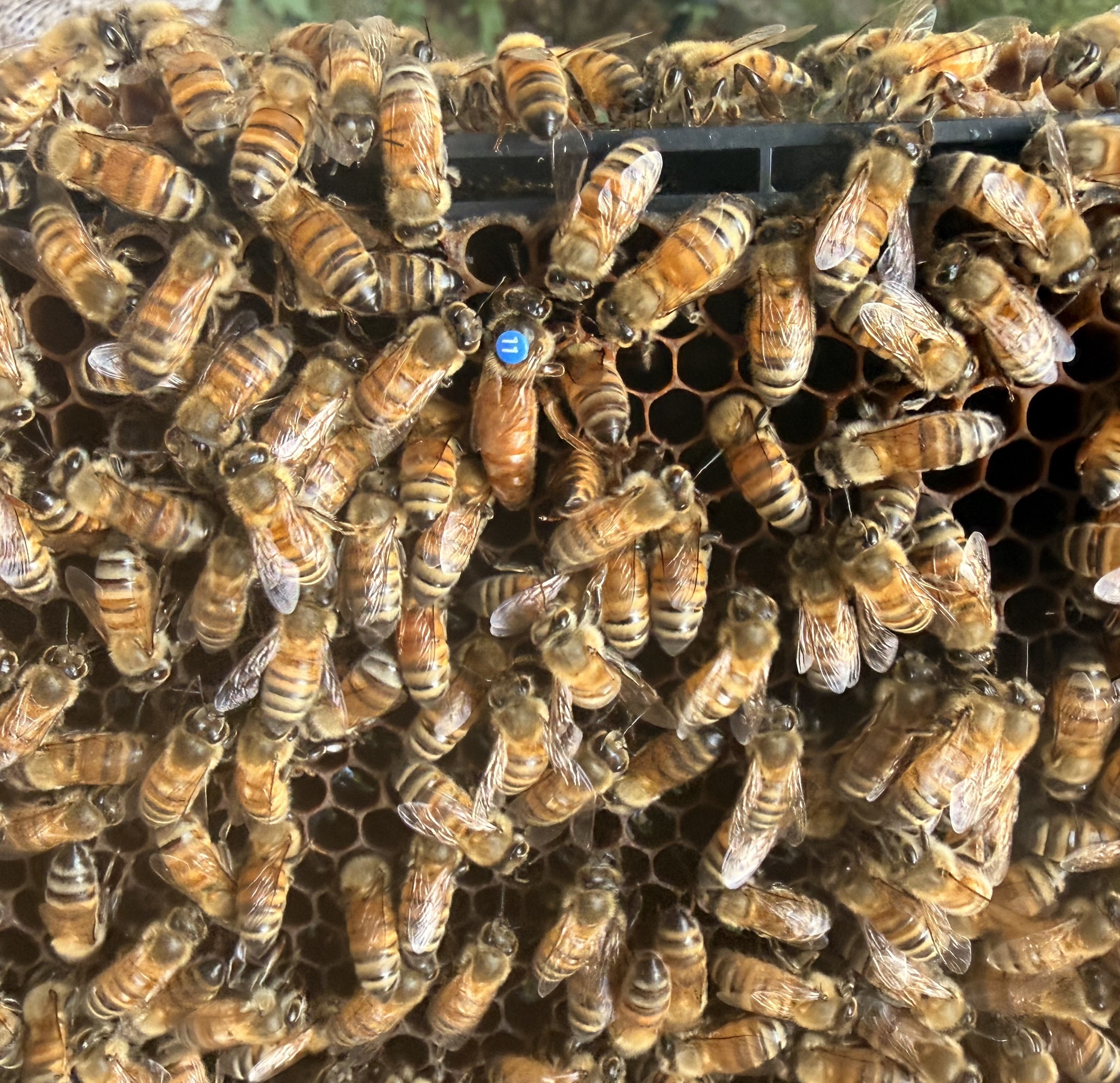
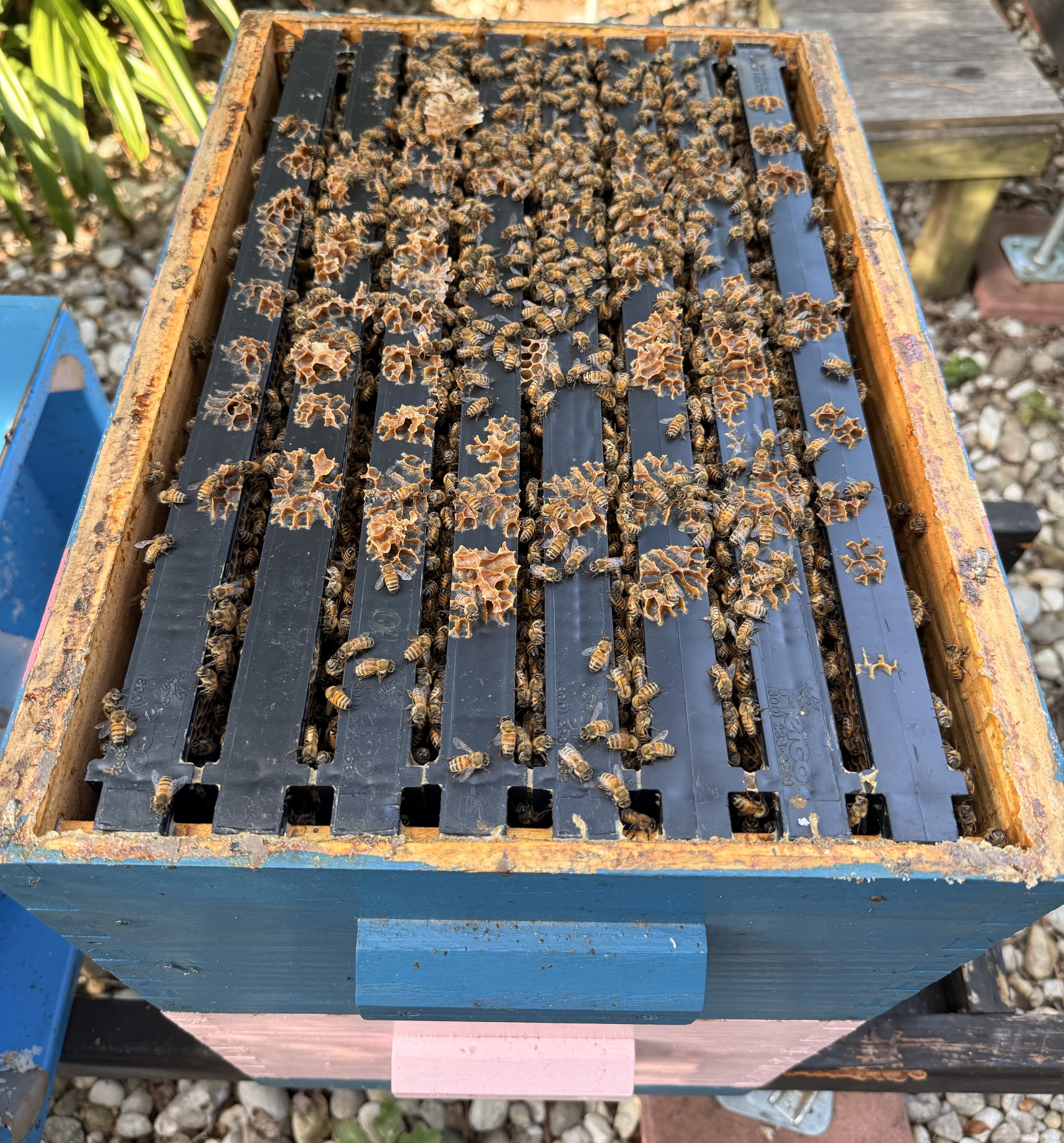
inspecting frames
How We Care for Our Bees
We conduct regular hive inspections every 7-10 days during active season, checking for signs of disease, ensuring the queen is laying, and monitoring food stores. We practice integrated pest management, using the least invasive methods to keep our bees healthy.
Our bees have access to natural forage year-round from gardens, trees, and flowering plants throughout Midtown Raleigh. We supplement with sugar syrup only when necessary during times of dearth, and we never harvest more honey than the bees can spare.
During winter, we ensure our colonies have adequate food stores and proper insulation. We minimize inspections in cold weather to help the bees maintain their cluster temperature and conserve energy.

Fascinating Honey Bee Facts
One Bee's Lifetime Production
A single worker bee produces only about 1/12 of a teaspoon of honey in her entire lifetime!
Flight Distance
Bees will fly up to 3 miles from their hive to forage for nectar and pollen.
Waggle Dance
Bees communicate the location of flowers through a "waggle dance" that indicates direction and distance.
Pollination Power
Honey bees are responsible for pollinating approximately one-third of the food we eat!
Hexagonal Engineering
Bees build hexagonal cells because it's the most efficient use of wax and provides maximum strength.
Wing Speed
A honey bee's wings beat about 200 times per second, creating their distinctive buzz!
Five Eyes
Honey bees have five eyes—two large compound eyes and three smaller simple eyes on top of their head!
Temperature Control
Bees maintain their hive at a constant 93-95°F by fanning their wings to cool it or clustering together to warm it.
Global Impact
There are over 20,000 species of bees worldwide, but only 7-8 species are true honey bees!
Ancient Sweetener
Honey never spoils! Archaeologists have found 3,000-year-old honey in Egyptian tombs that was still edible.